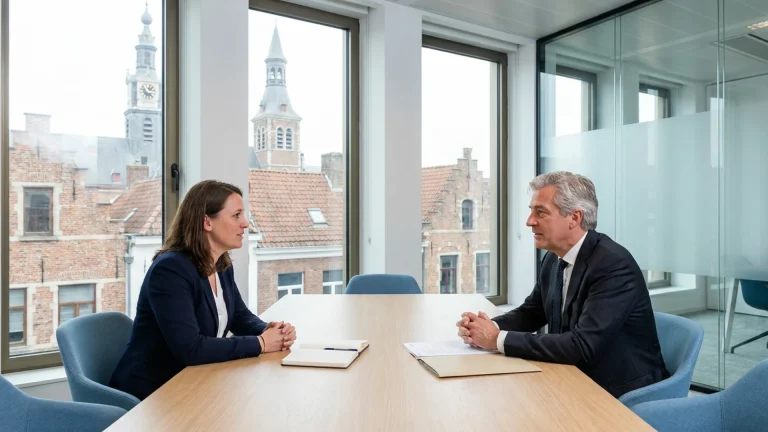


The business developer role is attracting a growing number of professionals, and it is easy to see why. The position bridges the worlds of sales, marketing and business management. It draws on advanced sales skills and a solid command of commercial negotiation. If the idea of a dynamic career, full of challenges and varied opportunities, appeals to you, this overview explains how to train for the role and succeed in it today.
What does a business developer actually do?
Before looking at the different routes in or the qualifications required, it is worth getting a clear picture of the day-to-day reality of this fast-changing role. The main task of a business developer is to identify new markets, prospect, manage customer relationships and support business growth. This versatility makes the role very attractive to anyone who enjoys constantly taking on new challenges and working in a stimulating environment.
Market analysis, creating innovative offers and monitoring results are an integral part of the job. Far from simply prospecting, a business developer also spends a great deal of time retaining existing customers through effective commercial negotiation and rigorous follow-up. This profile is involved as much in shaping strategy as in putting it into practice.
Which training path should you choose?
Our principle of transparency is one of our core values: saying what needs to be said, even when it’s uncomfortable. In practice, that means we’ll tell you if your salary range is misaligned with the market. We’ll tell you if the candidate you’re set on raises a red flag on a critical point. We’ll tell you if the training you’re asking for won’t solve the problem you’re describing. Everyone says they value transparency; few accept its relational cost. We do.
There is no single route into the business developer role. Many people choose business studies or a marketing-oriented programme. The range of academic training is wide: specialist schools, university master’s degrees, three-year bachelor’s programmes, as well as shorter certifications focused on sales techniques and sales management.
Business studies and recommended qualifications
Many employers favour candidates with a degree in business management, international trade or marketing. Programmes such as the French Short sales and customer-relations course (Négociation et Digitalisation de la Relation Client), a sales-focused professional bachelor’s degree or a master’s in business are particularly valued. Business schools often offer specialised programmes that include work placement modules, making it easier to acquire practical skills. If you are aiming for roles such as marketing manager, read our detailed profile of the marketing manager role.
For those who want to take a different path, continuing education remains an option, especially if you want to progress or change career after several jobs. MOOCs and specialist e-learning providers also make it possible to develop certain required skills quickly.
Alternative routes and specialisation
Some prefer to start straight away in the field, then add targeted training to their experience, particularly in digital marketing or international negotiation. This approach gives a practical view of the job while helping to build a strong professional network. There are also useful resources describing the skills required of an account manager, a position often close to business development.
Certifications issued by chambers of commerce or by training centres partnered with universities are still highly regarded. They open the door to specialisation in growth sectors such as tech, industry and innovative services. For companies, recruiting sales profiles also remains essential given the increased competition in these fields.
Which skills should you develop?
Beyond academic training, every business developer needs to master a specific set of required skills. To succeed, you need to balance technical knowledge with strong interpersonal qualities. Here are some areas to work on first:
- Advanced sales techniques and building a sales case
- Command of digital prospecting tools and CRM
- Commercial negotiation adapted to key accounts
- Business management skills and competitive intelligence
- Strong interpersonal skills and active listening
- Ability to present an attractive marketing strategy
- Flexibility in teamwork and the ability to work independently
A summary table shows the main areas for development:
| Area | Associated skill | Useful training |
|---|---|---|
| Sales & prospecting | Pitching, closing, CRM | Short sales and customer-relations course, business school |
| Negotiation | Handling objections, contracts | Negotiation training, master’s in business |
| Marketing | Market research, social selling | Bachelor’s in marketing, specialist MOOCs |
| Business management | Financial analysis, reporting | Master’s in SME management, finance certification |
Personal qualities sought in a business developer
In this job, attitude counts as much as technique. Solid knowledge helps, but nothing replaces a natural desire to persuade, build relationships and solve problems creatively. Perseverance, the ability to listen and intellectual curiosity are among the personal qualities expected of anyone who wants to excel in the role.
Alongside tenacity, an analytical mind helps you read market trends correctly. Open-mindedness, adaptability and a taste for innovation give you a real edge over the competition. According to many recruiters, these qualities matter almost as much as the level of qualification required, especially when recruiting junior profiles or candidates with unconventional backgrounds.
Continuous skills development
Once in the role, progressing means continuing to learn. Jobs in business development are changing fast: digital now plays a central role, new marketing tools appear regularly and managing customer data has become essential for adjusting your strategy.
Attending workshops, taking a continuing education module or gaining new certifications all play a key part in career development. Many companies now offer in-house programmes on advanced business development, project management or international commercial negotiation.
Discussing successes and difficulties with peers is also an excellent way to improve. Keeping a close watch on the market remains decisive: observing what works elsewhere helps you refine your own methods and stay competitive.
Learning from experienced professionals helps you become independent faster. Many business developers join specialist groups on social media or take part in professional clubs to broaden their horizons. These communities share advice on sales tactics, team management and changing practices.
Starting out with a mentor gives you personalised feedback on your first steps, whether in prospecting, customer meetings or putting together original commercial proposals.
Frequently asked questions about the business developer role
Which qualification is recommended to become a business developer?
As a rule, at least a three-year bachelor’s degree in business, marketing or business management is advisable. Business schools place the emphasis on training geared to sales techniques. Some employers also recruit candidates with a two-year higher education qualification if experience makes up for the shorter academic path.
- Short sales and customer-relations course
- Professional bachelor’s degree in business or marketing
- Master’s in management, marketing or entrepreneurship
What are the main day-to-day tasks?
A business developer divides their time between finding prospects, commercial negotiation, contract follow-up and customer retention. They also work on positioning offers, competitive intelligence and improving sales processes.
- Prospecting, in person and online
- Negotiating or renewing contracts
- Reporting on sales activity
- Developing strategic partnerships
What career progression can you expect?
After a few years’ experience, it is not unusual for business developers to move into roles such as sales manager, product manager, business unit manager or even independent consultant. This depends on the sector, the size of the organisation and the network they have built.
| Experience | Possible next role |
|---|---|
| 2-4 years | Account manager |
| 5-7 years | Sales team leader |
| 10+ years | Business development director |
Can you become a business developer without going to business school?
Yes, some professionals come into the role through their work experience and gradually develop all the required skills. Certified training courses, active mentoring and direct involvement in business management assignments make it easier to enter the profession.
- Specialist MOOCs
- Professional certifications