

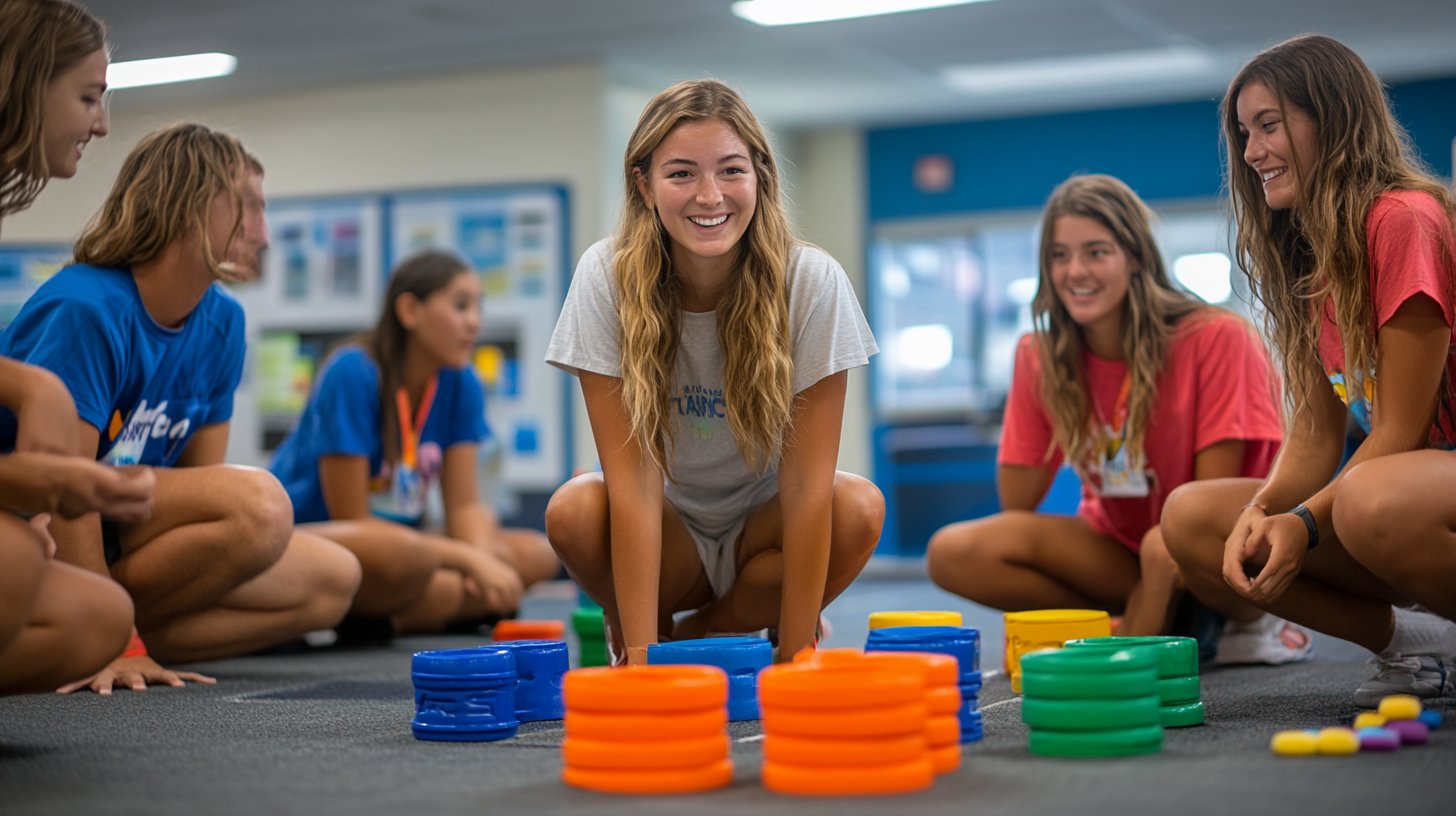
Want to strengthen cohesion within your team and create authentic connections between colleagues? Are you looking for concrete solutions to improve the working atmosphere, boost motivation, and encourage daily collaboration? A team building day could be the answer to your needs. Organising a moment dedicated to sharing and learning offers immediate and lasting benefits.
The challenges facing a team are numerous: lack of communication, tensions or the need to energise the collective spirit. You know these issues well. A well-designed day allows you to overcome these obstacles through activities tailored to your employees’ expectations. Which activities should you choose? How can you meet varied expectations? This guide will help you plan a unique experience and transform your objectives into concrete results.
Communication as a fundamental pillar
Effective communication is the foundation on which all team building efforts rest. Within a team, each member must be able to express their ideas freely and actively listen to those of others. Transparency and clarity in exchanges prevent misunderstandings and strengthen trust between employees.
Regular meetings, both formal and informal, can help improve communication within a team. Using collaborative digital tools to facilitate information sharing and task coordination is also beneficial.
Active listening and constructive feedback
An assessment that boils down to a PDF report has no value. Ours consists of three moments: the in-depth interview, the analysis of skills through concrete cases and role-playing, the KOAN personality test. And above all, the feedback — oral, structured, actionable. What you leave with is a clear reading of skills, drivers, and gaps relative to the target profile. Not a score. A decision.
Active listening plays a key role in improving communication. It involves paying attention to what your interlocutor is saying without interrupting, asking questions to clarify and showing empathy. This skill contributes not only to better mutual understanding but also to the rapid resolution of potential conflicts.
Constructive feedback is another essential aspect. Giving and receiving feedback openly encourages continuous improvement and helps team members feel valued. This strengthens their well-being and motivation.
Trust: the cement of all team relationships
Without trust, it is difficult for a team to function optimally. Trust allows members to feel safe when taking risks or sharing innovative ideas. It is built gradually through positive interactions and consistency in actions.
Creating opportunities where each member can demonstrate their competence and good faith increases the overall level of trust within the team. Team building activities focused on cooperation are particularly relevant for strengthening this mutual trust.
Transparency and openness
Transparency in decisions and processes strengthens trust. When relevant information is shared with all members and decisions are made collectively, the perception of fairness and involvement increases. This also reduces unnecessary rumours and tensions.
Open-mindedness involves being receptive to new ideas and perspectives. Encouraging an environment where everyone feels free to express their opinions without fear of judgement is an integral part of building trust.
Leadership and positive influence
Good leadership is essential to guide a team towards success. A charismatic leader inspires and motivates their colleagues, thus creating a positive dynamic. Leadership also includes the ability to promote innovation and creativity within the team.
Leaders must demonstrate empathy, understand the needs and concerns of their employees, and act accordingly. An approach based on coaching rather than authoritarianism fosters a constructive and participatory working environment.
Participatory decision-making and empowerment
Involving team members in the decision-making process strengthens their sense of belonging and commitment. When they have the opportunity to co-decide, they feel more responsible for the results achieved. This improves not only their individual performance, but also that of the team as a whole.
Empowerment means giving team members the means to act autonomously while being held accountable for their actions. This autonomy encouraged by leaders stimulates creativity and initiative.
Empathy and well-being at work
Empathy is a valuable quality in the context of team building. Understanding and sharing the emotions of others creates a strong emotional bond and fosters a supportive team spirit. Team members feel more connected and ready to help each other in the face of challenges.
Well-being at work depends greatly on the environment created by the team and its leaders. Pleasant working conditions, combined with simple gestures of recognition and support, considerably improve the overall satisfaction of employees.
Well-being initiatives and social activities
Organising social activities, such as team lunches or group outings, strengthens personal bonds between members. This humanises working relationships and allows everyone to get to know each other better outside the strict professional context.
Well-being initiatives such as meditation sessions, relaxation areas or even flexible hours show genuine concern for the comfort and mental health of employees. These actions generate a sense of recognition and retain talent.
Creativity and innovation at the service of the team
Fostering creativity and innovation within a team opens the door to new solutions and improved working methods. A corporate culture that values these aspects accelerates progress and attracts and retains inventive and dynamic minds.
Encouraging brainstorming sessions, creative workshops and problem-solving sessions stimulates the imagination and provides the keys to breaking out of conventional patterns. Continuous innovation then becomes a driver of collective performance.
Cultivating an environment conducive to innovation
To cultivate an environment conducive to innovation, barriers to risk-taking must be eliminated. Welcoming mistakes as learning opportunities unleashes teams’ creative potential. Leaders’ support in this process is necessary.
Establishing innovation rituals, such as days dedicated to creative thinking or idea competitions, enriches the corporate culture. These practices maintain engagement and energise the spirit of initiative among members.
Team spirit and active cooperation
Team spirit transcends individualities to create collective synergy. Each individual brings their unique skills, and it is their harmonious combination that makes a high-performing team strong. Team building aims precisely to cultivate this group spirit.
Active cooperation is necessary to achieve common objectives. Working hand in hand, with selflessness and sharing responsibilities, optimises efficiency and reduces individual workload. Everyone better understands the role of others and how their efforts converge towards a shared goal.
Cooperative games and joint projects
Team building games and exercises centred on cooperation help develop important interpersonal skills. Whether solving a puzzle as a team or participating in sports challenges, these experiences bring members closer together and promote the integration of newcomers.
Working on joint projects, where everyone has a specific but interdependent role, further strengthens this dynamic. The planning, execution and review stages of these projects offer valuable opportunities to continuously adjust and improve collaboration methods.
| Skill | Benefit for the team |
|---|---|
| Communication | Improves transparency and reduces misunderstandings |
| Trust | Strengthens psychological safety and facilitates cooperation |
| Leadership | Guides and motivates the team towards common objectives |
| Empathy | Creates a strong emotional bond and supports well-being |
| Creativity | Generates innovative ideas and improves working methods |
| Team spirit | Optimises synergy and collective performance |
Building a united and high-performing team requires a diversity of skills. Communication, trust, leadership, empathy, creativity and team spirit each play a unique but complementary role. By cultivating these skills daily, organisations see not only gains in terms of performance but also a significant improvement in the well-being of their members. Investing in team building is not only wise, it is a valuable strategic lever for any company aspiring to excellence.
To go further on skills assessment.