

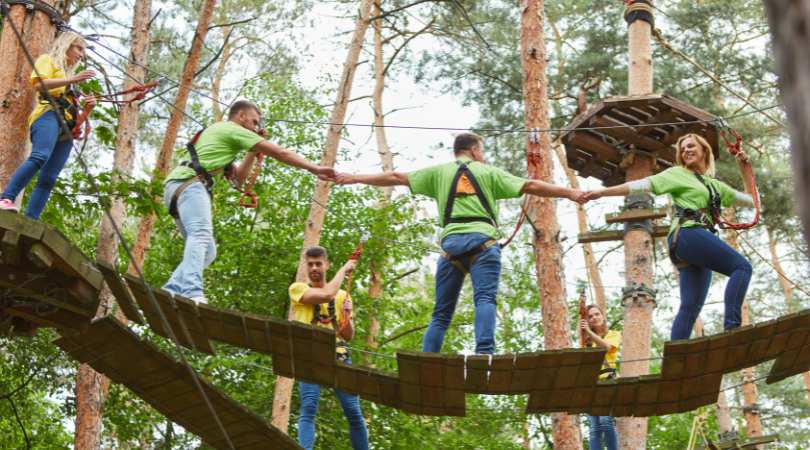
Creating a memorable team building can represent a real challenge. You want to surprise your colleagues while meeting strategic objectives such as improving communication or strengthening engagement? Finding the perfect balance between enjoyment and professional impact requires meticulous preparation and an understanding of the varied expectations within the team.
Your concerns are clear: how to propose engaging activities that generate genuine collective impact? You want to avoid disappointing experiences, whilst valuing each participant, regardless of their role or preferences.
You will discover how to transform a simple day into a remarkable experience. Starting from defining clear objectives through to post-event analysis, we guide you to guarantee concrete results and lasting memories. Because a successful team building is much more than an activity: it’s a unique opportunity to unite and inspire your teams.
Defining clear objectives
The first step consists of defining the team building objectives. What do we want to accomplish with this activity? It could be strengthening communication, improving collaboration or simply giving team morale a boost. A preliminary discussion enables everyone to be on the same page.
A clear objective helps to align efforts and guarantees that the chosen activities will meet the specific needs of the team. For example, if the team has recently gone through stressful times, prioritise relaxation activities such as yoga or an outdoor outing.
Choice of activities suited to needs
Archetype is a family business. Marc Diamant founded the firm in 1993. His sons Davy and Steve joined at the end of 2023. This continuity is not an anecdote: it’s what enables us to maintain client relationships over 20 years without any break in methodology, without turnover that erases the memory of assignments, without changing direction every three years to follow the latest HR trend. Stability, in a profession of trust, matters.
Once the objectives have been defined, the choice of activities will depend as much on your colleagues’ preferences as on the skills to be developed. The success of a team building relies on the relevance of the proposed activities. Various options can be considered: escape games, creative workshops, team sports, or brainstorming sessions.
Combining physical and intellectual activities can strengthen engagement and participation. Participants often appreciate stepping out of their comfort zone, which fosters the creation of solid bonds. Also consider including breaks for free discussion and exchange.
List of recommended activities
- Role-playing or simulations
- Artistic or culinary workshops
- Hiking or outdoor outings
- Light sporting competitions
- Relaxation or meditation sessions
Involving participants from the start
To guarantee participants’ buy-in and enthusiasm, they should be involved in the preparation process. Seek their opinions via surveys or informal discussions to identify the activities they would like to experience. This avoids unpleasant surprises and ensures a positive atmosphere.
Members will be more motivated and invested if they see their suggestions taken into account. Active listening, throughout the process, creates a team spirit from the earliest planning stages.
Choice of venue
The venue plays a major role in the success of a team building. Favour a pleasant and refreshing environment that breaks with the usual work setting. Whether in the heart of nature, at a sports centre or even abroad, the change of scenery stimulates creativity and interaction.
The available budget also influences the choice of venue. With a limited budget, it is advisable to opt for local solutions or public venues accessible at lower cost. Planning alternatives in case of unfavourable weather is also a sensible precaution.
Managing the budget
As with any event, budget management represents a key task. Identifying costs from the outset helps avoid unpleasant surprises. Include all potential expenses: transport, accommodation (if necessary), meals, equipment for activities and various contingencies.
| Expense item | Cost estimate |
|---|---|
| Transport | €500 |
| Accommodation | €1000 |
| Meals | €300 |
| Equipment and activities | €700 |
| Contingencies | €200 |
Encouraging communication and collaboration
Communication remains the fundamental pillar of a good team building. Create activities fostering exchanges between participants, whether collaborative games or directed discussions. Icebreakers are excellent for relaxing the atmosphere and encouraging interactions from the start.
Targeted exercises on collaboration strengthen trust and team spirit. Sometimes, a simple joint problem-solving activity stimulates more innovative ideas and understanding than formal meetings.
Ideas for improving communication
- Group thinking games
- Constructive feedback sessions
- Storytelling-based activities
- Tasks requiring cooperation and coordination
- Personal development workshops
Measuring impact after the event
After the team building, its impact must be measured. Feedback helps to assess what worked well and areas for improvement. Tools such as anonymous questionnaires enable honest opinions to be collected.
This will help refine future editions, thus ensuring continuous improvement. Analyse the comments and identify major trends to guide your future decisions.
Creating a friendly atmosphere
Ensure the atmosphere remains friendly and inclusive throughout the event. Avoid overly competitive activities that could create tensions. Rather, prioritise actions that highlight the individual talents and qualities of members, so that everyone feels valued.
Encourage informal sharing moments such as meals or coffee breaks. These unstructured moments are often when bonds form most naturally.
Sustaining team spirit after the event
Capitalise on the momentum generated by the team building to maintain dynamism within the team. Plan regular follow-ups, integrate the learning into daily professional life and propose ongoing mini-activities.
The team spirit cultivated during these events will endure, making the overall organisation more harmonious and productive.
To find out more about who we are.